Sky

Everything on this page I made myself, with a phone held to an eyepiece or set on a wall. In Belarus the phone was a Redmi Note 7. The 2021 pictures were stacked in Sequator and adjusted in Lightroom.

Before Berea. Mazyr and the family's country houses, 2020 to 2021.
The Moon through my first telescope, the phone held to the eyepiece. Mazyr, August 2020.
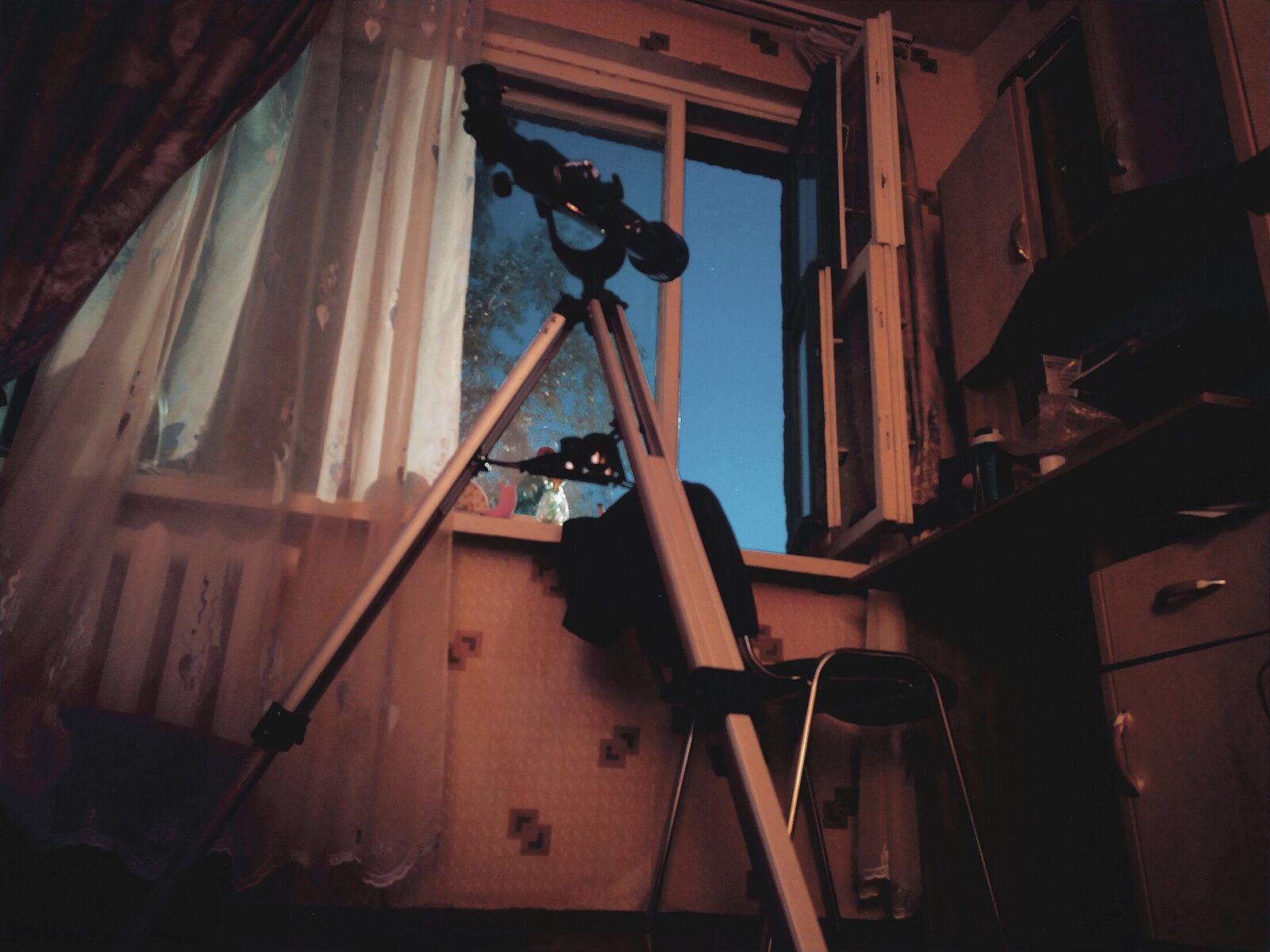
The telescope that came the second New Year, the one that once showed me the neighbors' television across the yard, at the open window of my room on the fifth floor. Mazyr, June 2020.
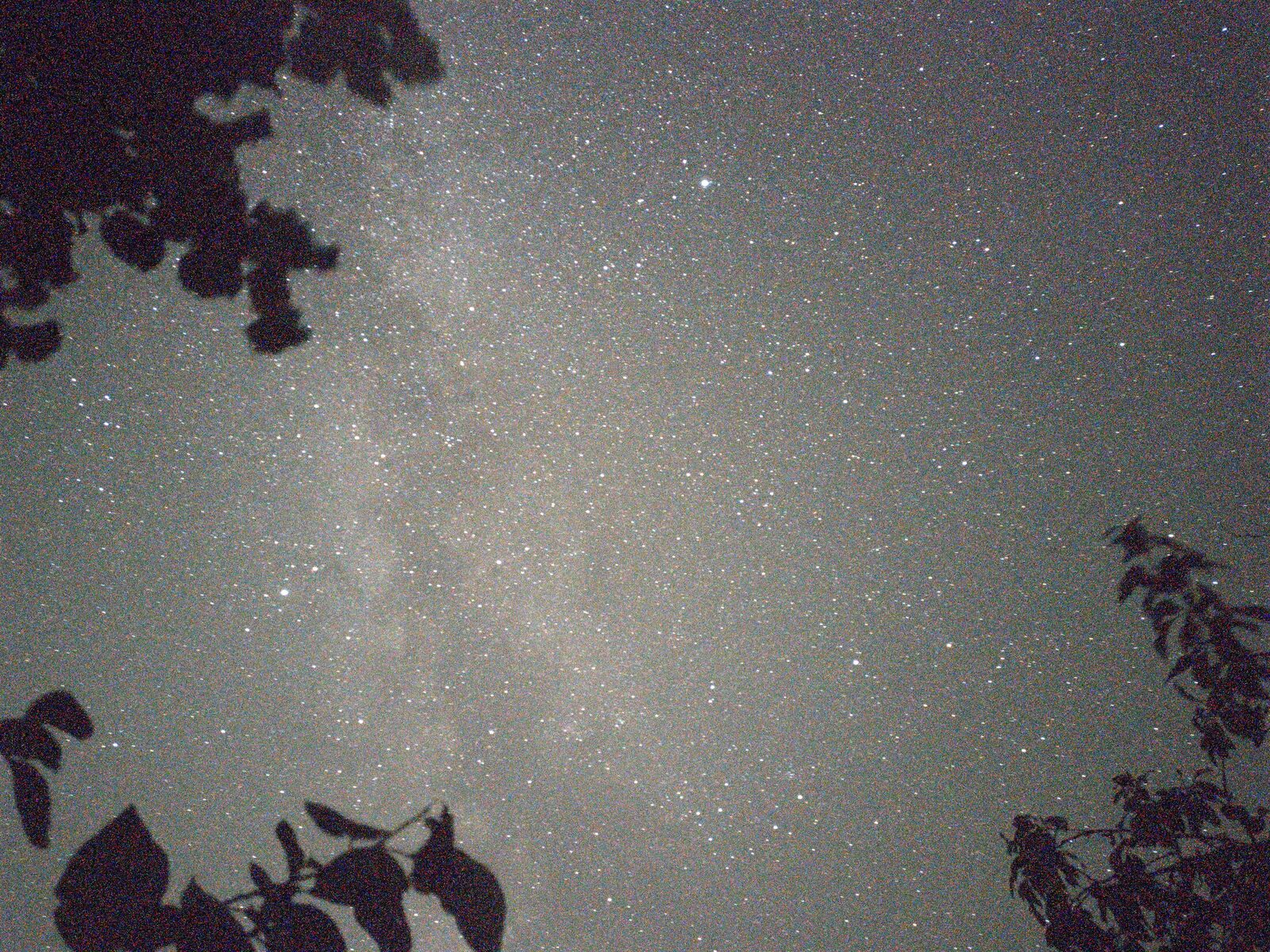
One raw frame of the Milky Way, 32 seconds at ISO 3200, before stacking. Our country house, 10 August 2021.
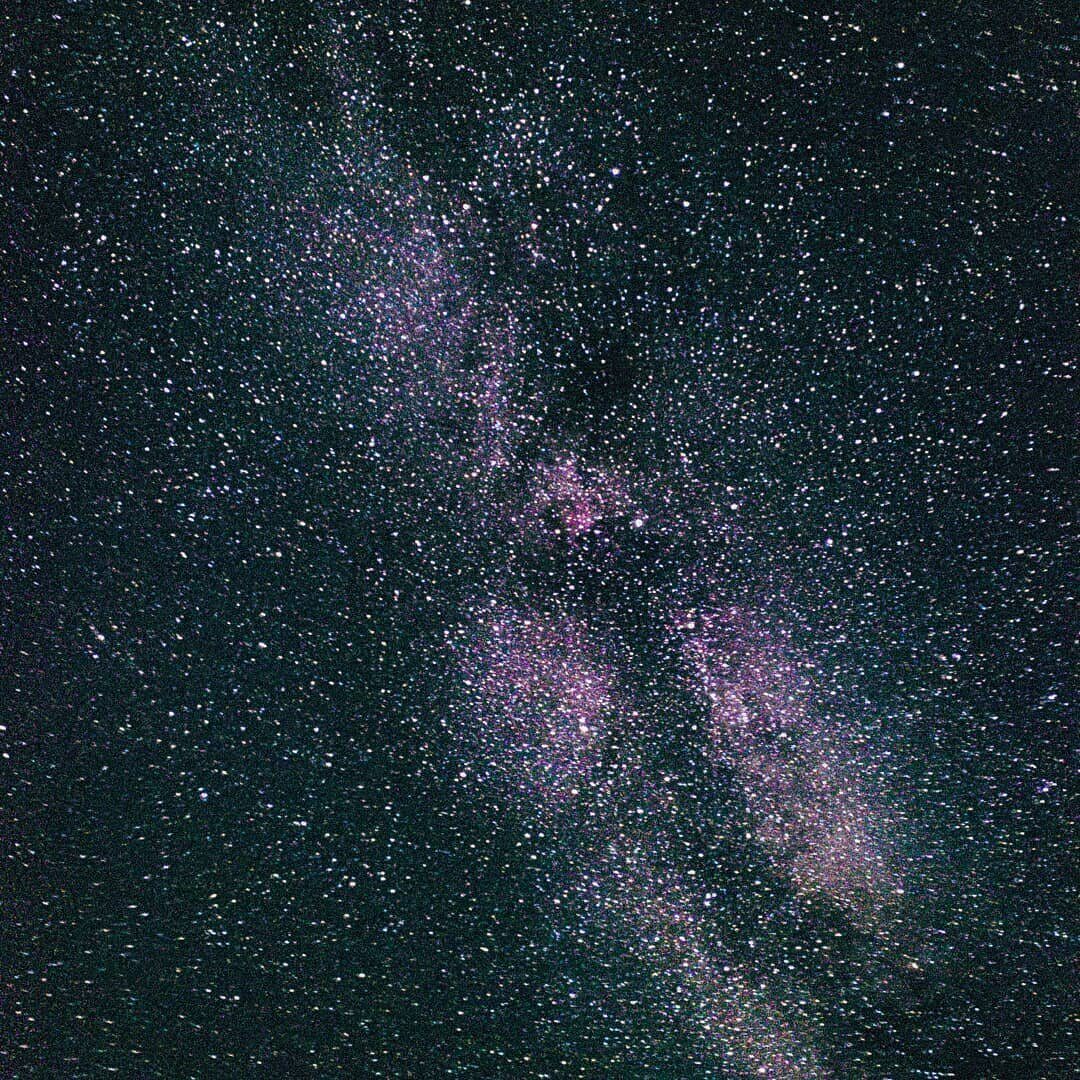
Twenty-one such frames stacked into one picture. My friends asked whether it was Photoshop. August 2021.
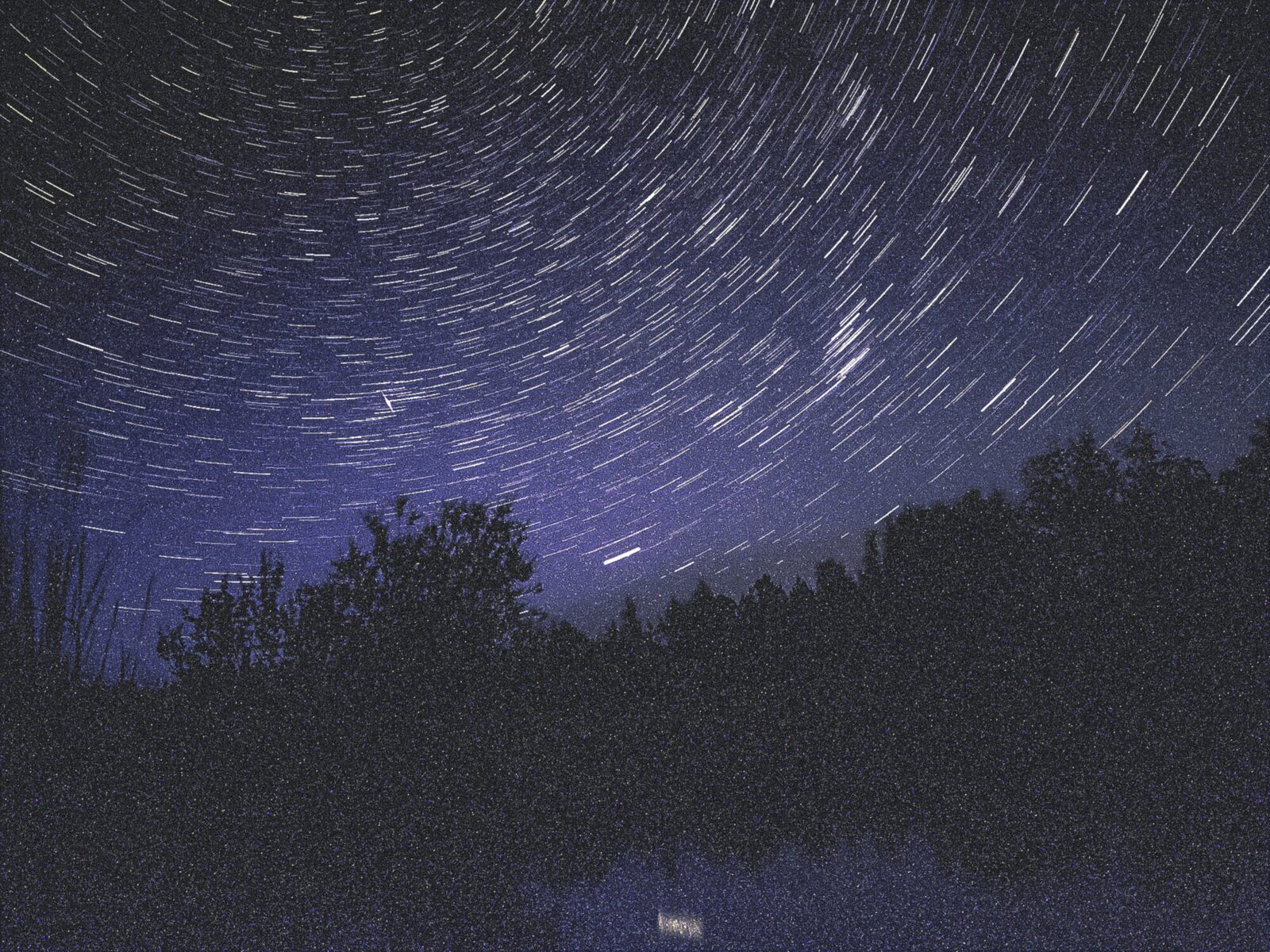
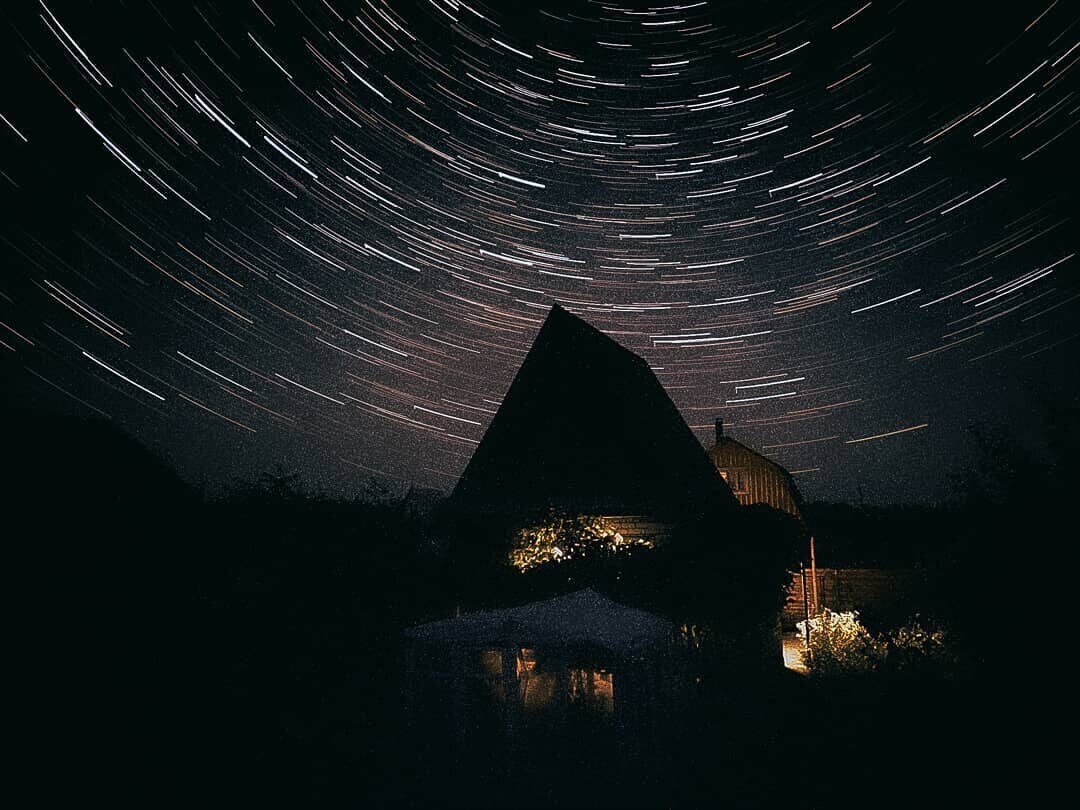
Star trails and a meteor over the lake near my grandfather's house, stacked phone exposures. August 2021.
Fifty exposures of 32 seconds, nearly half an hour of sky, over my grandparents' house. August 2021.

At Berea. The physics department's 8-inch telescope, an iPhone held to the eyepiece, 2024 to 2026.
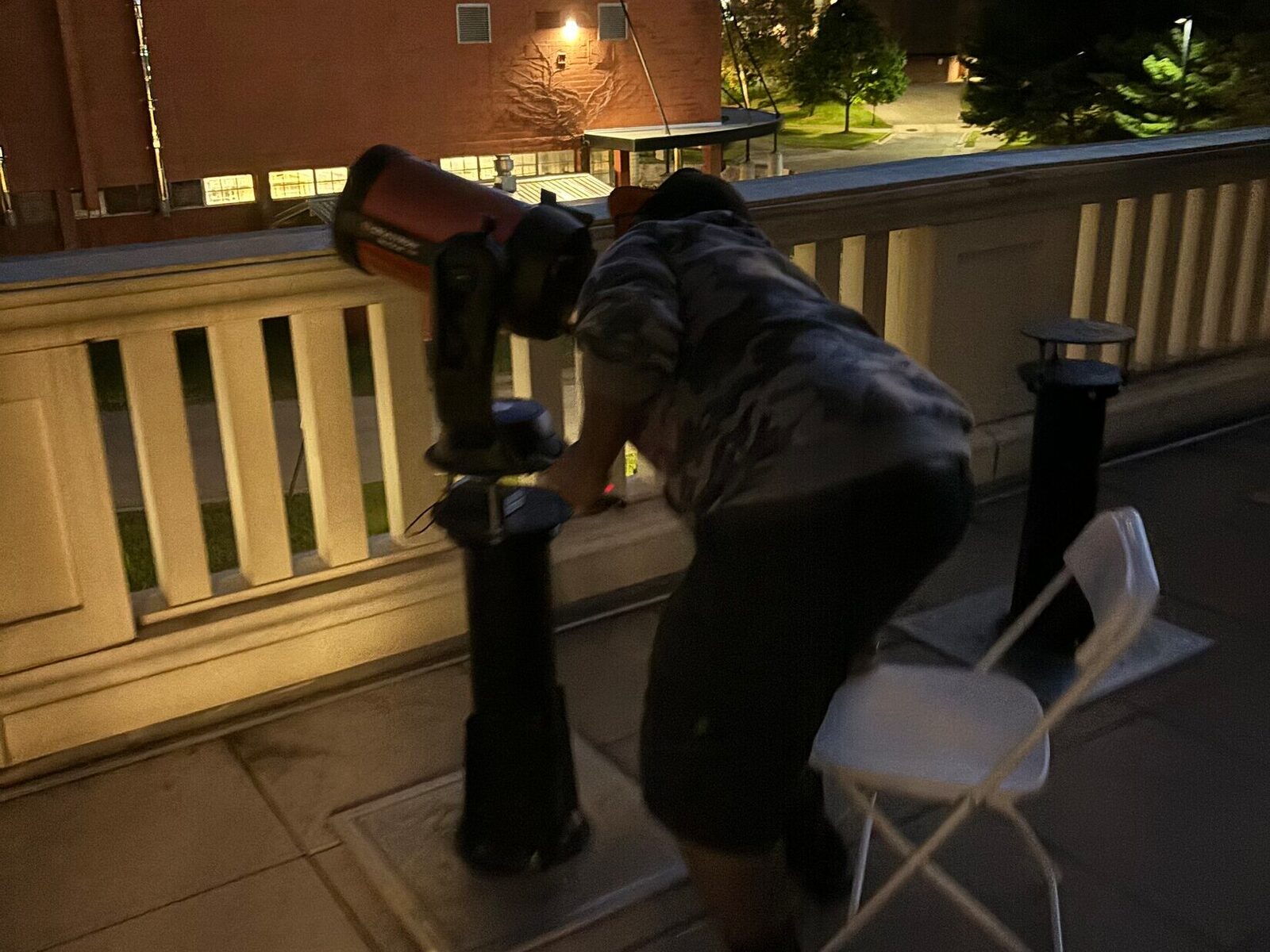
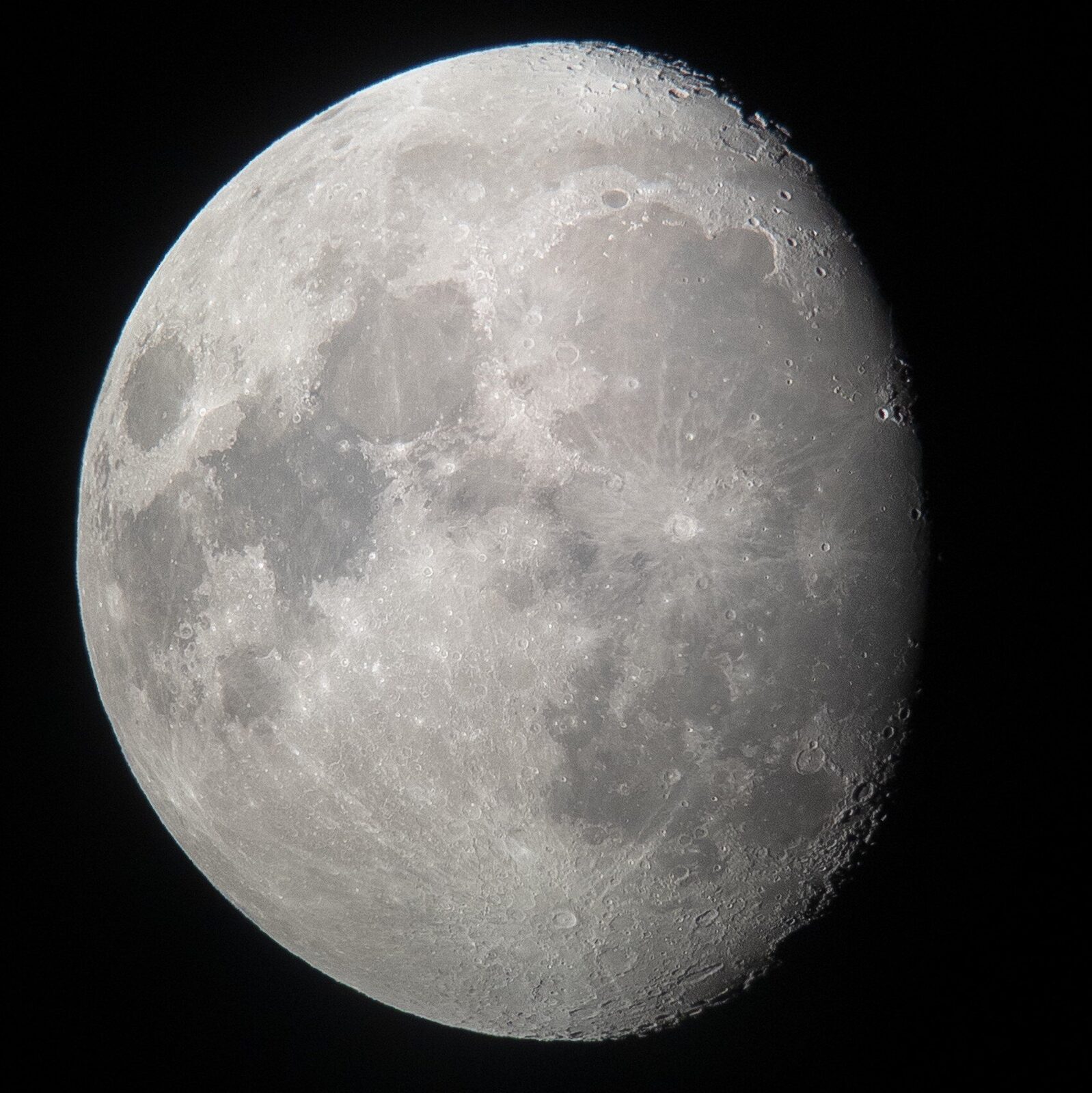
A visitor at the 8-inch on the observing deck of the science building during International Observe the Moon Night, which I helped set up. 14 September 2024.
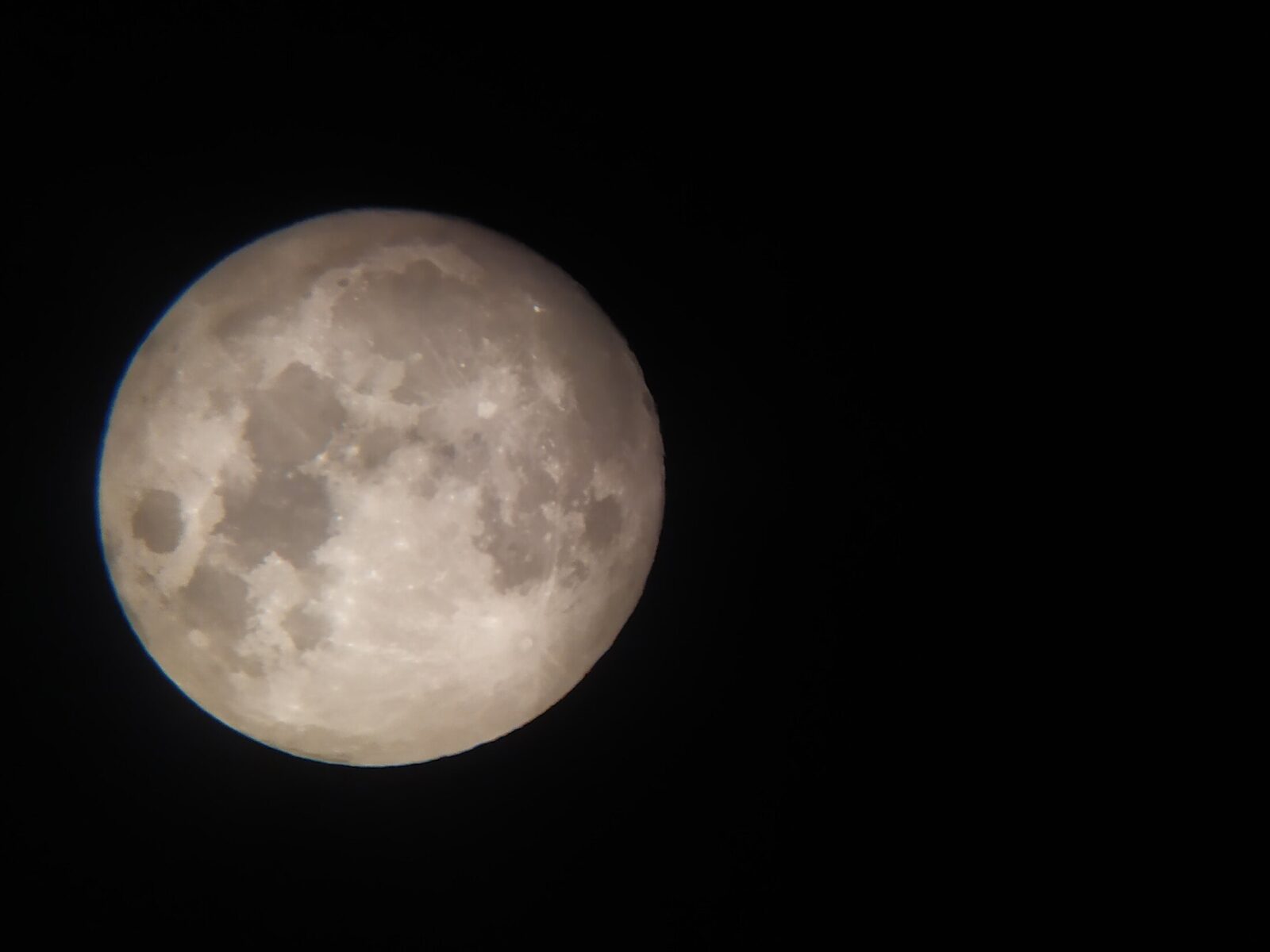
The Moon through the 8-inch that night, the phone held to the eyepiece. 14 September 2024.
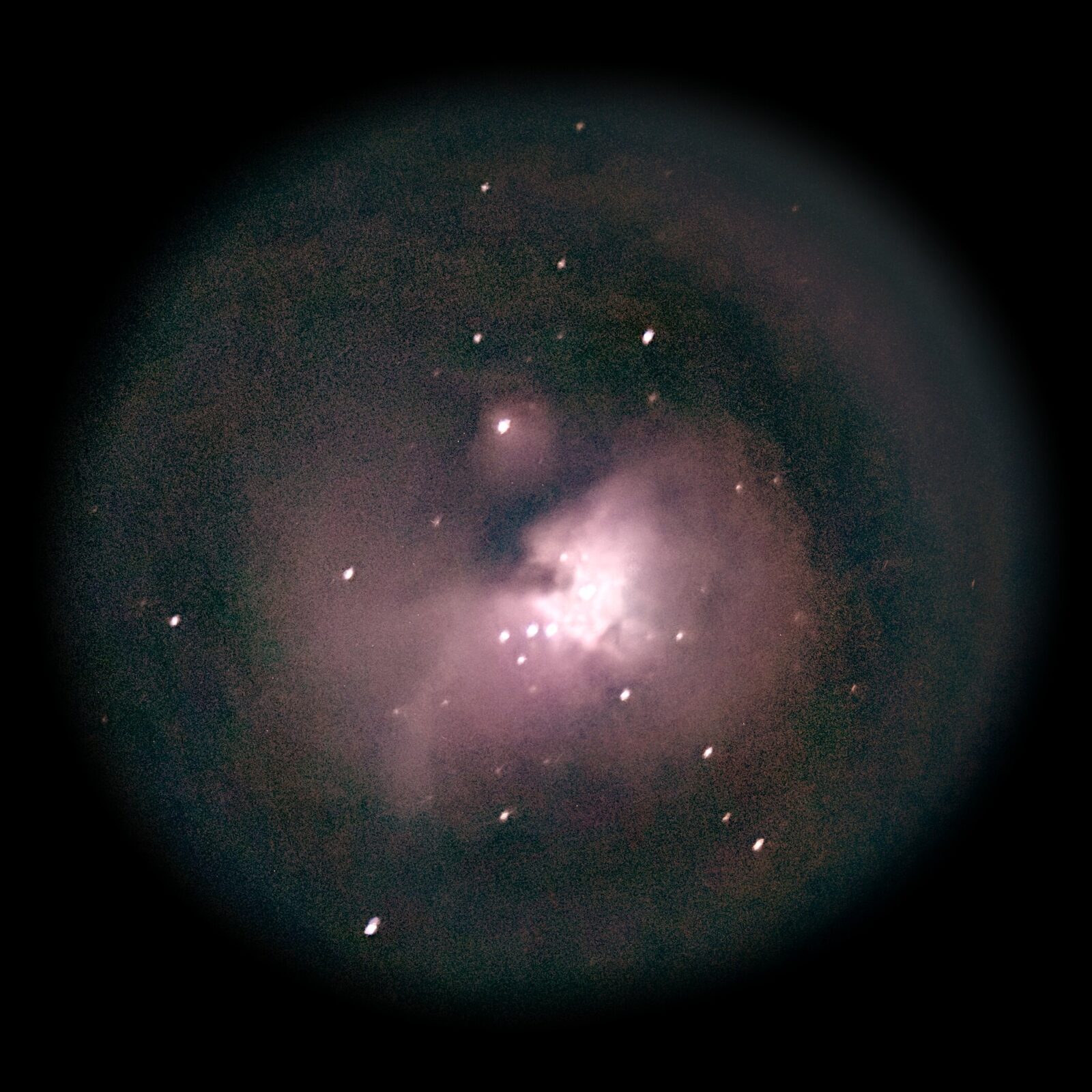
The Orion Nebula, M42, five phone frames at the eyepiece of the 8-inch, stacked, the night I first saw it, on a screen. Berea, 24 February 2025. One of the hundred Messier objects of the March marathon, so one percent done.
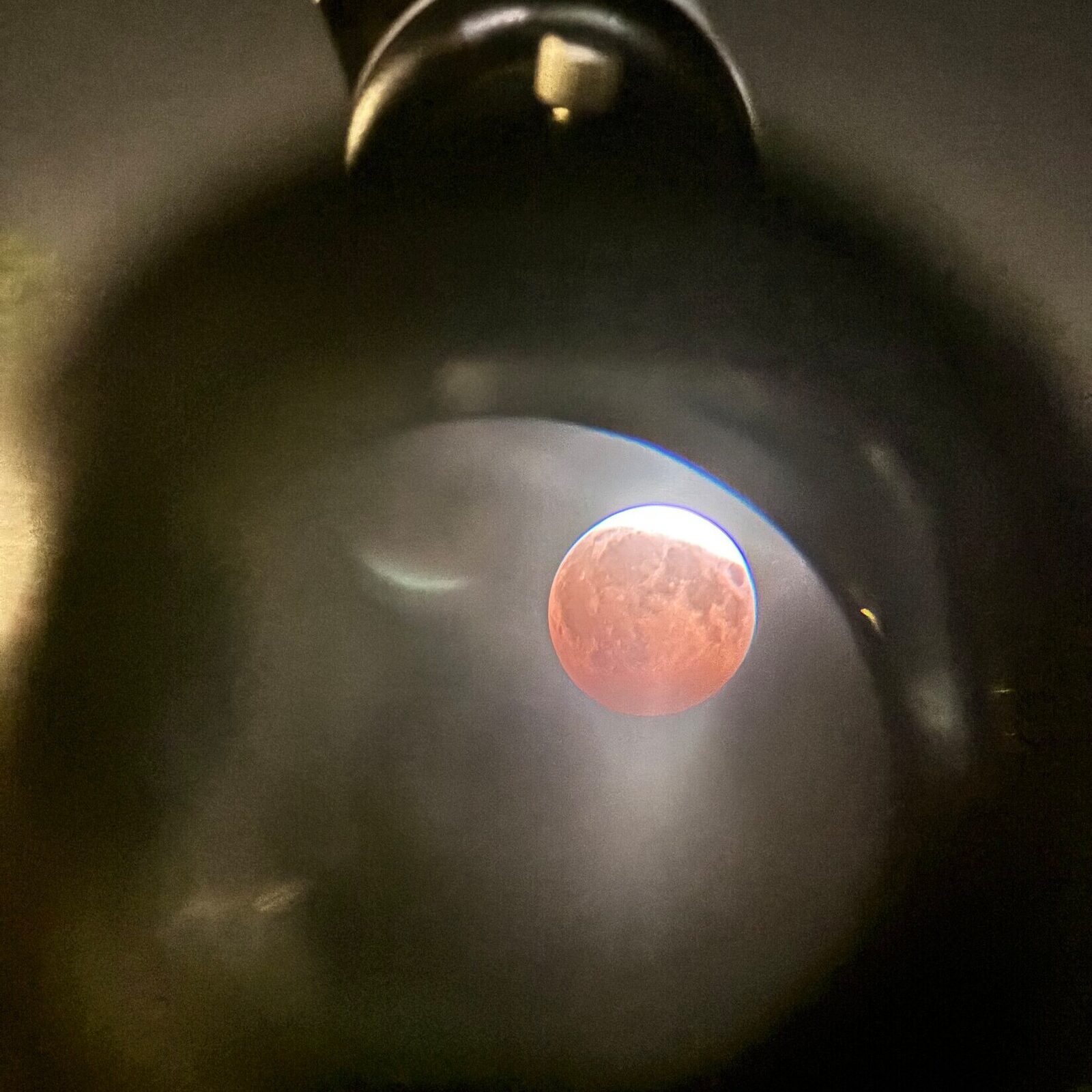
The partial lunar eclipse in the eyepiece during the Physics Club's public night on the alumni field. 27 August 2026.

Since fall 2025 I have been the astronomy coordinator of the Berea College Physics Club. I run the club's telescope nights. One is a Moon night for children on the observing deck of the science building. Others are open nights with the department's 8-inch telescope on a campus field, including the public night for the partial lunar eclipse of 27 August 2026 on the alumni field. Before that, I helped set up International Observe the Moon Night on 14 September 2024.